


Puppies chew — it soothes sore gums, relieves boredom and helps them learn appropriate play. But the wrong toy can cause choking, intestinal obstruction or broken teeth. This guide on safe puppy chew toys explains which materials and sizes reduce those risks, how to inspect and retire toys, and how to match a toy to your puppy’s chew style.
Quick answer — 3 rules to follow before you buy
Prefer pliable food‑grade rubber or silicone for most puppies; choose a toy larger than your puppy’s snout so it can’t be swallowed; supervise initial use and retire any toy that shows cracks, deep grooves, exposed stuffing or loose parts. These rules reflect veterinary guidance from AAHA, VCA and other veterinary sources.
Why chew toys matter for puppies
Chewing is normal for puppies. It helps relieve teething pain, redirects destructive chewing away from household items, and provides mental enrichment when toys are used as puzzle or treat-dispensing devices. At the same time, chewing creates hazards when a toy is too small, too hard, or damaged: swallowed pieces can cause intestinal obstruction and very hard chews can fracture developing teeth. Veterinary associations and clinics emphasize balancing enrichment with safety when choosing puppy chew toys.
Sources: ASPCA, AAHA, VCA Hospitals.
Primary hazards to avoid
- Choking: Small toys or parts that fit entirely in a puppy’s mouth can obstruct the airway.
- Gastrointestinal obstruction: Ingested pieces (foam, stuffing, rope fibers) can block the gut and require emergency surgery.
- Dental fractures: Very hard chews (antlers, cooked bones, some hard nylons) can crack or break developing teeth.
- Toxic contamination or batteries: Contaminated materials or accessible button batteries have led to recalls and serious injuries; check official recall listings before purchase.
These hazards are documented by veterinary organizations and government recall records; owners should treat them as realistic risks rather than unlikely events. Sources: AAHA, CPSC recall pages, FDA recalls.
Materials explained — what to choose and what to avoid
Material choice is one of the strongest predictors of a toy’s safety for puppies. The following table summarizes common materials with concise safety notes (supported by veterinary guidance).
| Material | Typical use | Safety note | Source |
|---|---|---|---|
| Food‑grade natural rubber | Stuffable toys, chew rings | Pliable and gentle on emerging teeth; good balance of durability and tooth safety for many puppies. | Preventive Vet, KONG (manufacturer) |
| Food‑grade silicone | Soft chew toys, treat dispensers | Non‑porous and easy to clean; gentle on teeth, but may tear for aggressive chewers. | PetMD, Preventive Vet |
| TPR/TPU (TPE-like) | Light‑chewer toys | Acceptable for light chewers; less resistant than purpose‑made puppy rubber for persistent chewers. | Preventive Vet |
| Nylon (hard) | Durable chew bones | Can be long‑lasting but sometimes too hard and associated with dental fractures in puppies; monitor closely. | VCA, manufacturer pages |
| Antler / large bone | Long‑lasting natural chews | Very hard and can fracture teeth—generally not recommended for puppies with thin or developing enamel. | AAHA, VCA |
| Plush / fabric | Comfort play, supervised fetch | High ingestion risk if torn; use only under supervision and discard if stuffing or squeakers are exposed. | ASPCA |
| Rope | Tug, supervised chewing | Good for supervised chewing/tug; frayed strands can cause linear foreign bodies—retire when fraying appears. | Veterinary clinic guidance |
Note: Manufacturer claims about "food‑grade" or "non‑toxic" materials should be treated cautiously unless independently verified. There is no single mandatory pet‑toy chemical standard in the U.S.; ASTM is developing voluntary standards and many manufacturers test voluntarily.
Source on standards and testing context: ASTM International, Intertek.
How to size a chew toy for your puppy (with the thumbnail test)
Direct answer: Choose a toy larger than your puppy’s snout that cannot fit entirely in the mouth; use the thumbnail indentation test to check hardness (if you can’t dent the toy with your thumbnail, it may be too hard for a puppy).
Why it matters: Size prevents swallowing/choking; the thumbnail test gives a quick field check against excessively hard materials that raise tooth‑fracture risk.
Step‑by‑step sizing and hardness check:
- Measure snout width: the toy should be wider than the puppy’s snout, and should not fit entirely inside the mouth.
- Perform the thumbnail test: press your thumbnail into the toy's surface with moderate pressure. If the material indents slightly, it is likely pliable enough for many puppies; if it does not indent at all, the toy may be too hard.
- For chew strength: when in doubt, size up (choose the next larger size) and supervise the first sessions.
- Follow manufacturer size guidance where given, and when unsure pick the larger option rather than the smaller.
Sources: AAHA, VCA Hospitals, Nylabone manufacturer guidance.
Toy types and who they're for
Match toy type to the puppy’s needs and level of supervision.
- Stuffable treat toys (stuffable KONGs): Good for teething, slowing feeding and enrichment. Typically designed in softer puppy formulas; supervise first uses to ensure the puppy can't chew out large pieces. (Manufacturer claims: KONG Puppy line is formulated for puppy teeth.)
- Soft rubber or silicone chew toys: Good baseline choice for many puppies—gentle on teeth and easy to clean.
- Dental chews with VOHC seal: Can help plaque control for older puppies/adolescents if size and material are appropriate; look for VOHC‑approved products if dental benefit is the goal.
- Plush toys and squeakers: High play value but best for supervised play. Remove if stuffing/squeaker is exposed.
- Rope toys: Useful for tug and supervised chewing; retire when frayed to avoid ingestion of strands.
- Hard nylon bones/antlers: Reserve for older dogs with established heavy‑chewing tolerance; vets frequently caution against these for teething puppies because they can fracture teeth.
Sources: KONG product pages (manufacturer claims), ASPCA, VOHC info referenced by veterinary dentistry sources.
Inspection and retirement checklist
Direct answer: Inspect toys weekly (or before each session for heavy use); retire and discard any toy with cracks, deep grooves, exposed stuffing or squeakers, loose parts, or pieces smaller than a snout. Rope toys that show fraying should be removed immediately.
Actionable checklist:
- Inspect weekly for cracks, splits, deep chew grooves or exposed internal parts.
- Run your fingers along rope toys; retire if individual threads are loose or protruding.
- Remove and replace any toy with hardened, sharp fragments or small pieces that could be swallowed.
- If your puppy swallows a piece or shows vomiting, lethargy, abdominal pain or inability to pass stool, contact your veterinarian or emergency clinic right away.
Sources: Veterinary emergency clinic posts and AAHA guidance.
Recalls, testing and regulation — what buyers should know
There is no single mandatory federal standard exclusively for pet toys in the U.S.; ASTM has been developing voluntary dog‑toy standards and many manufacturers perform their own testing. Because chemical and mechanical testing varies by brand, buyers should check official recall listings before purchase.
How to check recalls (quick steps):
- Search the U.S. Consumer Product Safety Commission (CPSC) recall database: cpsc.gov/Recalls.
- Check FDA animal and veterinary product recall pages: FDA Recalls & Withdrawals.
- Search the manufacturer’s website for safety notices and model‑specific information.
- When buying imported or low‑cost toys, prefer brands with transparent testing and declared third‑party reports.
Example: Some toys have been recalled in the past for accessible button batteries in embedded lights — a serious ingestion hazard — which illustrates why recall checks matter. Source: CPSC recall example.
Quick buyer checklist — pick, inspect, supervise
- Assess your puppy’s chew style: nibbler, moderate chewer or persistent chewer (observe 10–15 minutes of play).
- Choose material: favor pliable food‑grade rubber or silicone for teething puppies; avoid very hard chews (antler, hard nylons) for young puppies.
- Size the toy so it cannot fit entirely in the mouth; when unsure, size up.
- Supervise initial sessions and check for rapid deterioration; do not leave plush/squeaky toys unsupervised until you’re confident they won’t be destroyed.
- Inspect weekly and retire damaged toys immediately.
- Check CPSC/FDA recall databases before buying and prefer brands that publish material/testing information.
Sources: Consolidated from AAHA, Preventive Vet, VCA and veterinary clinic guidance.
Common scenarios — which toy for which puppy
Below are practical pairings that reflect typical puppy behaviors. These are conservative recommendations aligned with veterinary guidance and should be adjusted to your puppy’s observed behavior.
If your puppy is a nibbler
If your puppy nibbles rather than gnaws aggressively, choose soft silicone or puppy‑formulated rubber toys that are easy to chew and clean. These soothe tender gums and are less likely to injure teeth.
If your priority is gentle teething relief and easy cleaning, this option is worth considering because silicone/rubber balances softness and durability for light chewers.
At the time this article was prepared, the supplied listing showed a 4.5‑star rating (see product page for current details). Check the current Amazon listing for up‑to‑date price and availability.
If your puppy is a moderate chewer
Moderate chewers benefit from slightly tougher rubber or purpose‑made nylon chew toys designed for puppies. These provide longer engagement but should still be monitored for wear.
If you want a durable chew for a moderate chewer that still offers flavor and chew engagement, consider options that balance durability with acknowledged safety guidance from the manufacturer (monitor closely for signs of wear).
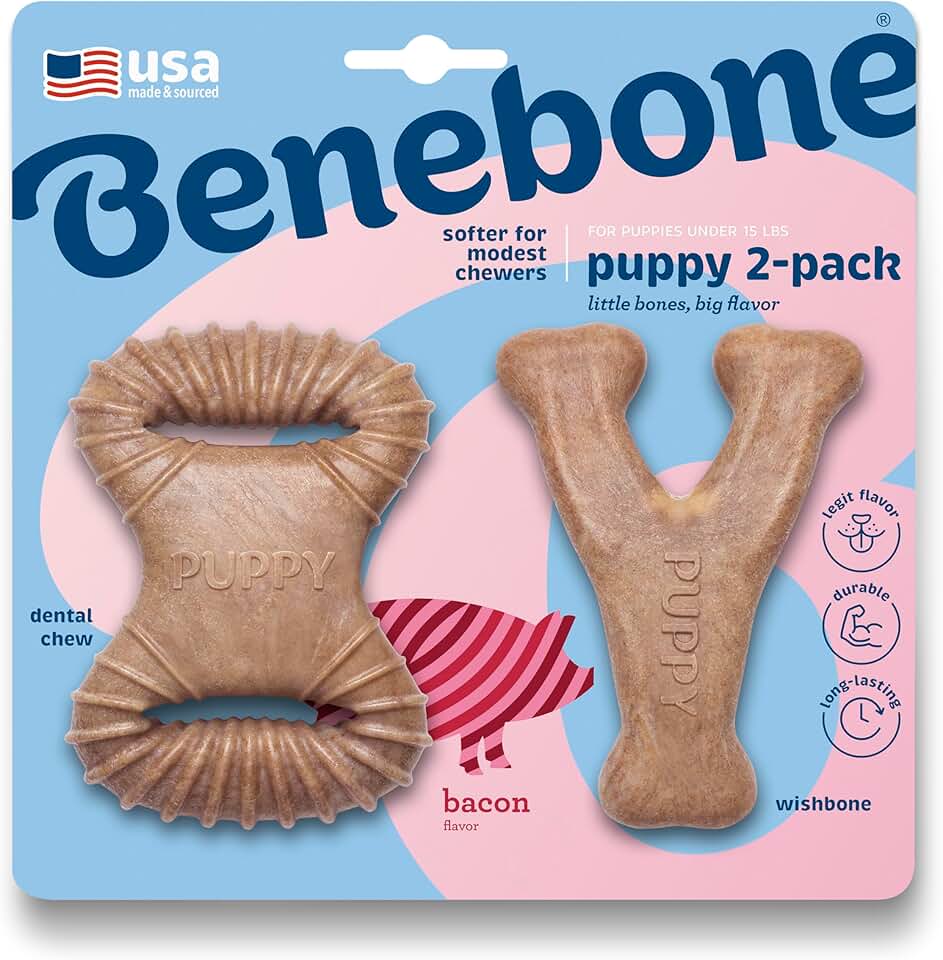
Manufacturer guidance for nylon products typically advises monitoring and following size recommendations. The product data supplied included a 4.5‑star rating and sales volume note; verify the current listing for updated details.
If your puppy is a persistent chewer
Persistent chewers may eventually need sturdier adult‑grade chews, but for puppies it’s safer to start with durable rubber or controlled chew sessions with tougher chews under close supervision. Avoid antlers, cooked bones and very hard nylons until dental maturity to reduce fracture risk.
If your priority is a variety pack for supervised teething sessions and you prefer multiple soft items to rotate and replace, a multi‑pack of softer chew toys can provide rotation and backup when one toy is retired.

The supplied listing showed a 4.3‑star rating in the captured data; always check the current product page for up‑to‑date reviews and pricing.
When to seek veterinary help
Contact your veterinarian or an emergency clinic immediately if your puppy:
- Swallows a toy or a large piece of one (witnessed ingestion).
- Shows continuous vomiting, abdominal pain, lethargy, bloating, or inability to pass stool.
- Has a suspected broken tooth — veterinary dental evaluation is needed to prevent infection and long‑term issues.
Emergency presentations from toy ingestion and dental fractures are documented in veterinary literature; early professional evaluation reduces complications.
Practical cleaning and maintenance tips
- Wash rubber and silicone toys regularly in warm soapy water or on the top rack of a dishwasher if the product allows. Rinse thoroughly.
- Sanitize occasionally with a 1:32 diluted bleach solution (follow product instructions and manufacturer guidance) or pet‑safe disinfectant and rinse well.
- Avoid porous toys for puppies prone to mouthing household items that might carry dirt or bacteria; non‑porous silicone is easier to sanitize.
- Keep a rotation of several toys so you can retire one while offering a clean replacement.
Check manufacturer cleaning guidance for each product. If the manufacturer suggests a cleaning method, treat it as the primary instruction for that product.
Common questions (FAQs)
What materials are safest for puppies to chew?
Short answer: Food‑grade natural rubber and food‑grade silicone are commonly recommended for puppies because they combine pliability with reasonable durability and are less likely to fracture teeth than very hard chews. TPR/TPU can work for light chewers; avoid very hard nylons and antlers for young puppies. Sources: Preventive Vet, PetMD.
How do I use the thumbnail test?
Short answer: Press your thumbnail into the toy's surface with moderate force—if it indents slightly, the toy is pliable enough for many puppies; if it won’t indent, it may be too hard and could increase tooth‑fracture risk. Use this along with size and supervision checks. Source: AAHA.
How big should a chew toy be for my puppy?
Short answer: The toy should be larger than the puppy’s snout and should not fit entirely in the mouth. When in doubt, choose the next larger size and supervise initial use. Source: AAHA and VCA Hospitals.
Can I leave my puppy unsupervised with a plush or squeaky toy?
Short answer: Generally no—most vets advise supervised use for plush/squeaky toys because puppies can destroy them and ingest stuffing or squeakers. Remove immediately if the toy is torn. Source: ASPCA.
Are nylon bones safe for puppies?
Short answer: Nylon bones may be appropriate for some moderate chewers but can be too hard for many puppies and have been associated with tooth fractures. If you choose nylon, follow size guidance, supervise, and check frequently for sharp fragments. Sources: VCA, manufacturer guidance from Benebone/Nylabone (manufacturer claims should be verified).
How often should I inspect my puppy’s toys?
Short answer: Inspect weekly or more frequently with heavy use. Replace immediately if you find cracks, deep grooves, exposed parts, or fraying. Rope fibers are an immediate retire sign. Veterinary clinics recommend prompt retirement to avoid emergency situations.
What should I do if my puppy swallows part of a toy?
Short answer: Contact your veterinarian or emergency clinic immediately. Watch for vomiting, abdominal pain, lethargy, or changes in bowel movements. Do not induce vomiting unless instructed by a vet. Source: Veterinary emergency guidance.
Are 'indestructible' toys actually indestructible?
Short answer: No. "Indestructible" is a marketing term without a standardized industry test for all dogs. A toy’s durability depends on the dog's individual chewing strength and technique. Supervise and inspect even toys marketed as durable. Source: Intertek industry commentary and veterinary reports.
How do I check if a toy model has been recalled?
Short answer: Search the CPSC recall database and the FDA's animal/veterinary recalls page, and check the manufacturer’s website for product‑specific notices. Links: CPSC Recalls, FDA Recalls.
Should I trust 'food‑grade' or 'BPA‑free' labels?
Short answer: Labels can be useful indicators, but independent verification varies by brand. Prefer manufacturers that publish third‑party testing data or certificates, and be cautious with low‑cost unbranded imports where testing transparency is limited. Source: PetMD, Preventive Vet.
Conclusion and next steps
Choose pliable food‑grade rubber or silicone toys as a starting point for most puppies, size toys so they can’t be swallowed, supervise the first sessions, and inspect toys weekly for wear. Avoid very hard chews (antlers, hard nylons) for teething puppies because of the risk of dental fractures. Check official recall databases (CPSC and FDA) before a purchase and prefer brands that publish testing or safety information.
Affiliate disclosure: Best Buy Hot Sales Deals may earn a commission from qualifying purchases made through links on this page, at no additional cost to you.
When you’re ready to compare current listings, click the product links above to view the manufacturer pages and the latest Amazon listings for current prices, sizes and reviews. Remember: prices and availability change — check the seller’s listing for the most up‑to‑date information.
Last updated: 2026‑09‑29. For complicated or unusual chewing behavior (extremely destructive chewing, repeated dental fractures, or ingestion incidents), consult your veterinarian or a certified veterinary dentist for personalized guidance.






0 Comments